Steel Dreams: How America Finally Fell Head Over Heels for Giant Robots
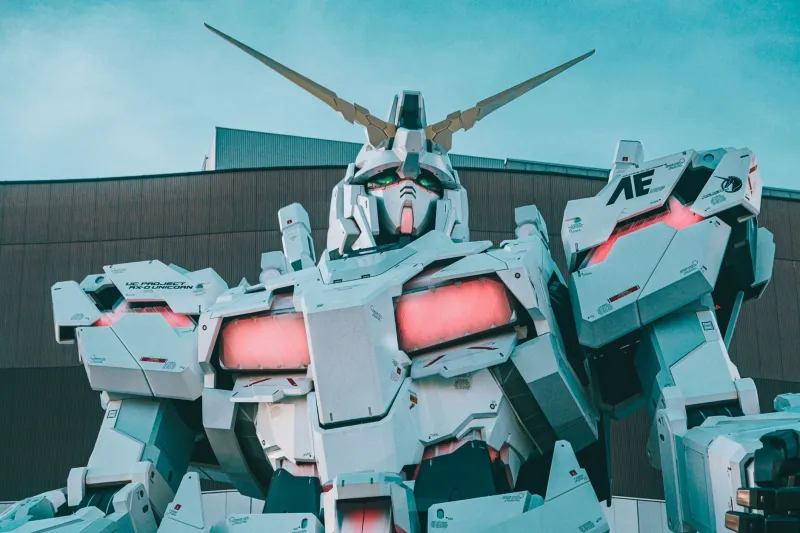
If you walked into your local hobby shop five years ago and asked about Gundam model kits, you probably got a blank stare — maybe a polite redirect toward the model trains section. Walk in today, and there's a solid chance you'll find an entire wall dedicated to Gunpla, a waiting list for limited releases, and a teenager in a Zeon hoodie arguing with the cashier about which High Grade kit is the best entry point for beginners. Something shifted. Something big.
America's love affair with giant robots didn't happen overnight. It took decades of slow cultural infiltration, a few key pop culture moments, and — honestly — the internet doing what the internet does best: turning niche passions into global movements. But here we are, and the mecha genre is having what can only be described as its mainstream moment in the US.
It Started With a Lion-Shaped Foot in the Door
For a lot of American fans of a certain age, the gateway drug was Voltron. When World Events Productions adapted the Japanese series Beast King GoLion for US audiences back in 1984, they weren't just dubbing anime — they were planting a seed. Kids across the country watched five robot lions combine into a single, sword-wielding giant and thought: yeah, that tracks. Voltron wasn't sold as anime. It was sold as an action cartoon, and that distinction mattered. It made giant robots feel accessible, even familiar.
But once Voltron opened the door, other properties started trickling through. Robotech brought actual serialized mecha storytelling to American airwaves. Mighty Morphin Power Rangers — an adaptation of the Japanese Super Sentai franchise — turned Zord battles into a full-blown cultural phenomenon in the early '90s. These weren't fringe interests. These were lunchbox-and-action-figure, Saturday-morning mainstream hits.
Still, for a long time, the deeper world of mecha anime — the Mobile Suit Gundam series, Neon Genesis Evangelion, Code Geass — remained largely confined to dedicated fan communities. Anime clubs, early internet forums, convention dealer rooms. The general American audience wasn't quite ready to commit.
Pacific Rim Changed the Calculus
Then Guillermo del Toro showed up with a $190 million love letter to everything mecha, kaiju, and anime-adjacent, and the conversation shifted almost overnight.
Pacific Rim (2013) wasn't just a blockbuster — it was a cultural translator. Del Toro openly cited Neon Genesis Evangelion, Gundam, and Patlabor as inspirations, and he didn't hide it. He celebrated it. For longtime mecha fans, the film felt like vindication. For casual moviegoers, it was a spectacular introduction to a genre they hadn't realized they were already primed to love.
"Pacific Rim was the moment I started having real conversations with non-anime people about giant robots," says Marcus, a 34-year-old Gundam collector from Austin, Texas. "Before that, explaining why I spent $80 on a plastic robot kit got me weird looks. After Pacific Rim, people got it. Or at least they were curious."
The film underperformed domestically compared to expectations, but it found enormous audiences overseas — and in the years that followed, its cult status in the US only grew. By the time Pacific Rim: Uprising hit theaters in 2018, a new generation of fans was already primed and waiting.
The Streaming Era: When the Floodgates Opened
Netflix deserves a significant chunk of credit for what's happened since. When the platform began aggressively licensing and producing anime content — including the Neon Genesis Evangelion remaster, the Gundam Netflix films, and original productions like Pacific Rim: The Black — it put mecha content in front of audiences who had never gone looking for it.
Algorithms did the rest. Someone finishes Attack on Titan, the platform recommends Gurren Lagann. Someone watches Gundam: Hathaway, and suddenly they're three hours deep into a Reddit thread about UC timeline lore. The entry points multiplied, the barriers dropped, and American viewership numbers climbed.
Streaming data from Crunchyroll and Netflix has consistently shown that US audiences now rank among the top consumers of mecha anime globally — a stat that would have seemed almost laughable a decade ago.
Gunpla Goes Mainstream
Maybe the most concrete evidence of mecha's mainstream breakthrough is what's happening in the hobby market. Gundam plastic model kits — Gunpla — have been a cornerstone of Japanese hobby culture since 1980. In the US, they were available but niche, mostly sold through specialty retailers and anime convention vendors.
Today? Retailers like Barnes & Noble, Target, and countless local hobby shops have dedicated Gunpla sections. The Gundam Base concept stores have expanded internationally, and US-based hobbyists are flooding YouTube and TikTok with build videos, custom paint jobs, and review content that pulls millions of views.
"We tripled our Gunpla inventory two years ago and still couldn't keep up with demand," says the owner of a hobby shop in the Chicago suburbs who asked to remain anonymous. "The Perfect Grade Unicorn Gundam sold out in 48 hours. We had a waitlist. For a model kit."
The demographic breakdown is equally telling. It's not just longtime anime fans. Gunpla has attracted model builders who came from military scale modeling, artists drawn to the customization possibilities, and younger fans who discovered the hobby through social media. The community is broader and more diverse than it's ever been.
Why Now? Why America?
So what's actually driving this? A few threads seem to be weaving together at once.
First, there's a generational handoff happening. The kids who grew up on Voltron and Power Rangers are adults now with disposable income and a nostalgia-fueled appetite for the deeper mecha content they never got to explore as children. They're going back and watching Zeta Gundam and Macross Plus and discovering that the genre has decades of genuinely great storytelling waiting for them.
Second, the quality bar on modern mecha anime has never been higher. Productions like 86 — Eighty Six, Aldnoah.Zero, and the ongoing Gundam franchise entries are visually stunning and narratively sophisticated. They hold up against anything else in prestige animation — domestic or otherwise.
Third — and this one's worth sitting with — giant robots just hit different right now. There's something about the idea of a massive, powerful machine piloted by a flawed, determined human that resonates in the current moment. Mecha stories are fundamentally about agency, about the relationship between humanity and the machines we build, about what it means to fight for something bigger than yourself. That's not exactly a hard sell in 2024.
What's Next for Mecha in America
The pipeline looks strong. Upcoming Gundam projects, continued Netflix investment in anime originals, and the ever-growing convention circuit (Anime Expo, Otakon, and regional shows are all reporting record attendance) suggest this isn't a bubble — it's a baseline shift.
More US studios are also taking notes. The success of Pacific Rim paved the way for studios to greenlight mecha-adjacent projects with more confidence. And as co-productions between American and Japanese animation studios become more common, expect the genre's footprint to keep expanding.
For those of us who have been riding this wave for years — building kits at midnight, debating the merits of the Turn A Gundam's design, rewatching Evangelion for the fifth time — there's something genuinely exciting about watching the rest of America finally catch up.
Welcome to the party. The kits are on the shelf. The streams are queued up. The robots are ready.
And honestly? They've been waiting long enough.