Bedroom Pilots: How Indie Studios Are Leaving AAA Mecha Games in the Dust
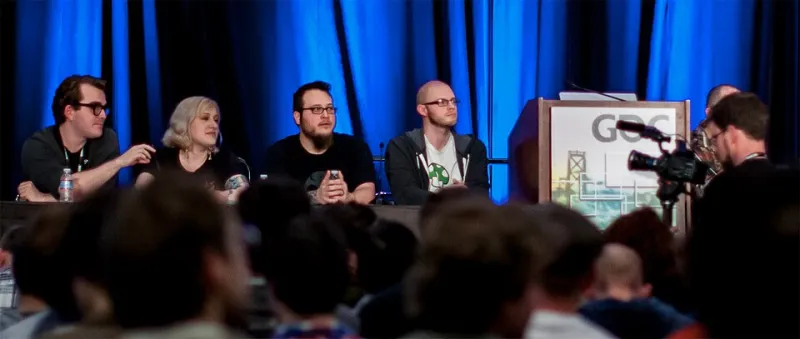
Photo: Fuad Kamal from USA Cropped by czar, CC BY-SA 2.0, via Wikimedia Commons
Somewhere in a one-bedroom apartment in Portland, a solo developer is building a mecha game that will make you feel things that no AAA title has managed in years. In a shared workspace in Chicago, a three-person team is rethinking what a giant robot combat system can actually do when nobody's forcing them to ship by Q4. And in a garage studio outside of Atlanta, someone is making a mech game that looks like nothing you've played before — because they had no budget for market research and just made the thing they wanted to play.
This is where mecha gaming is actually alive right now. Not in the franchise installments and licensed tie-ins from the major publishers, but in the spaces where nobody's watching and nobody's playing it safe.
The AAA Mecha Problem Is a Risk Problem
Let's be fair to the big studios for a second. Making a major mecha title is genuinely expensive, and expensive projects attract risk-averse thinking. When you're spending tens of millions of dollars on a game, you want validated concepts, proven audiences, and familiar IP. That's not cowardice — it's accounting.
But the side effect is a genre that's been largely frozen in place at the AAA level for years. The mecha games coming from major publishers are technically polished, visually impressive, and creatively cautious. They iterate on what worked before. They license recognizable robots. They avoid the weird stuff.
"There's a version of a mecha game that publishers know will sell a certain number of copies," said Jordan Reyes, lead designer at a two-person indie studio currently developing an original mecha title. "They make that version. Nobody gets fired. Nobody gets surprised. And nobody gets genuinely excited, either."
What Indie Developers Are Actually Doing Differently
The indie mecha scene isn't just making smaller versions of what AAA studios do. They're asking different questions entirely.
Some are exploring the downtime between battles — the logistics of maintaining a giant robot, the relationships between pilots, the bureaucratic nightmare of operating war machines in civilian spaces. These are stories and systems that licensed AAA titles can't touch because they'd distract from the action loop that sells copies.
Others are experimenting with scale and perspective in ways that major studios have largely ignored. One early access title currently generating serious community buzz puts you in the role of a ground-level soldier trying to survive a battlefield dominated by mechs you can't control — a complete inversion of the genre's usual power fantasy that turns every giant robot into a force of nature rather than a vehicle.
Then there's the mechanical experimentation. Indie developers are building mecha games around asymmetric multiplayer, narrative branching systems, physics-driven construction, and procedural damage modeling. Not all of it works. A lot of it fails spectacularly. But the failures are interesting in ways that another incremental update to an established franchise simply cannot be.
The Community Connection That Changes Everything
One of the most significant advantages indie mecha developers have over their AAA counterparts is proximity to their audience. These developers are, almost universally, mecha fans themselves. They grew up on Gundam and Evangelion, they played Armored Core until the discs wore out, and they're building the games they always wanted to exist.
That authenticity shows up in the details — the way a cockpit UI is laid out, the sound design choices, the narrative beats that hit differently for someone who actually cares about the genre's history. And because indie developers typically build their communities early in development, they're getting real feedback from real fans before the game is locked.
"I had people in my Discord who knew more about mecha design philosophy than I did," laughed Sam Okafor, a solo developer whose mecha title has amassed a dedicated following despite being over a year from launch. "That community basically became my design team. They caught stuff I never would have caught."
This feedback loop is something AAA studios struggle to replicate. By the time a major mecha title reaches its community, the design is essentially frozen. Indie developers can pivot, iterate, and incorporate fan insight in real time.
The Armored Core Effect
It's worth noting that the indie mecha surge didn't happen in a vacuum. FromSoftware's Armored Core VI — technically a major studio release but developed with a degree of creative autonomy that feels more indie than corporate — demonstrated conclusively that there's a massive, underserved audience for mecha games that take the genre seriously.
The commercial and critical success of Armored Core VI in the US gave indie mecha developers something invaluable: proof of market. Publishers and investors who previously dismissed the genre as a niche curiosity had to reckon with the numbers. And aspiring indie developers who'd been sitting on mecha concepts suddenly had a data point to point to when pitching to accelerators or crowdfunding their projects.
"That game changed the conversation," said Reyes. "Before, you'd mention you were making a mecha game and people would kind of nod politely. After Armored Core VI, people actually leaned in."
Where the Genre Goes From Here
The gap between indie ambition and AAA execution in mecha gaming isn't closing anytime soon — if anything, it's widening. Major publishers are doubling down on franchise safety while indie developers are exploring territory that the big studios haven't mapped yet.
The best-case scenario is that successful indie titles eventually influence AAA design, the way indie games in other genres have gradually shifted mainstream conventions. There are already signs of this happening — design ideas that originated in small mecha projects are showing up in how major studios discuss future projects.
But honestly? The indie mecha scene doesn't need validation from AAA publishers to matter. The games are being made, the communities are growing, and the people building this stuff are doing it out of genuine love for giant robots and the worlds they inhabit.
At Robo Murito, that's the kind of energy we'll always have time for. Keep building, bedroom pilots. The rest of us are watching.