Strapped In and Let Down: Why VR Mecha Games Keep Missing the Mark in America
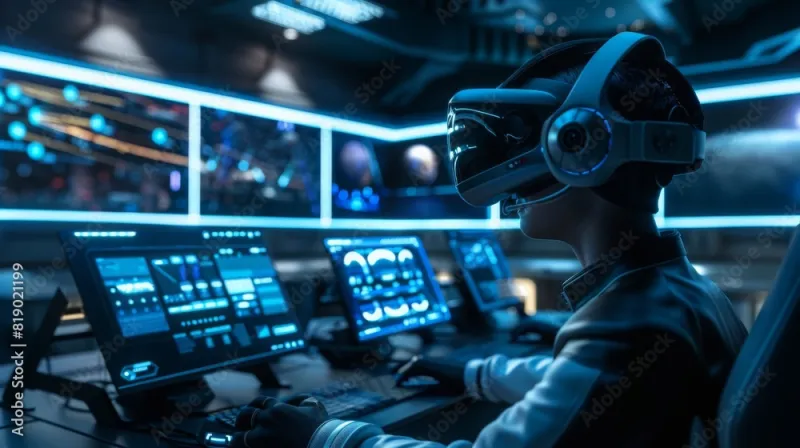
Photo: VR headset cockpit simulation gaming setup futuristic, via as2.ftcdn.net
There's a moment every mecha fan has imagined. You slide into the seat, the screens flicker on around you, and for one perfect second you actually believe you're piloting a 40-foot steel giant through a crumbling cityscape. Virtual reality was supposed to make that moment real. For a lot of American-developed titles, it's still just a moment — and nothing more.
So what happened? How did a genre that practically invented the cockpit fantasy end up so consistently fumbling the VR execution? Grab a seat (preferably one with a five-point harness), because we're breaking it all down.
The Hype Cycle Hit Mecha Fans Hard
When consumer VR headsets started going mainstream around 2016, mecha communities lit up. Forums, Discord servers, Reddit threads — everyone was convinced this was finally the tech that would bridge the gap between Armored Core fantasy and lived experience. Publishers took notice, and a wave of VR-adjacent mecha titles started surfacing at trade shows and in early access storefronts.
The problem? Most of those titles treated VR as a feature rather than a foundation. Developers would take an existing mecha game, slap on headset compatibility, and call it a cockpit simulator. The result was a lot of floating hands, nauseating movement curves, and UI elements clearly designed for a flat monitor crammed awkwardly into a three-dimensional space. Players noticed immediately.
"It felt like someone handed me a cardboard box and told me to pretend it was a Gundam," said Marcus T., a competitive mecha gamer from Phoenix who tested several early VR titles at launch. "The bones weren't built for it. You could tell."
What Japanese Studios Actually Understood
While American publishers were retrofitting flat-screen games with VR support, Japanese studios were approaching the problem from a completely different direction. Titles developed in Japan — particularly those tied to long-running mecha franchises — started from the cockpit inward. The question wasn't can we add VR? It was what does it feel like to exist inside this machine?
That philosophical difference shows up in everything from control mapping to audio design. Japanese VR mecha experiences tend to treat the cockpit as architecture. Switches have weight. Screens have depth. The pilot seat itself communicates information through subtle vibration and positional audio. The machine feels inhabited rather than operated.
American developers, by contrast, have historically prioritized spectacle. Big explosions look great in VR. A sense of genuine embodiment takes a lot more work — and a lot more willingness to slow down and let the player just sit in the machine for a while before the action kicks off.
The Technical Excuses Only Go So Far
Some developers will point to hardware limitations as the primary culprit, and to be fair, they're not entirely wrong. Frame rate demands in VR are brutal, and rendering a detailed mecha cockpit at the fidelity needed to make it convincing is genuinely expensive in processing terms. Locomotion in a giant robot also creates unique comfort challenges — the scale mismatch between your real body and your virtual machine can trigger disorientation fast.
But here's the thing: those are solvable problems, and indie developers with a fraction of the budget are already solving them.
Studio Ironframe, a three-person team based out of Austin, Texas, spent two years quietly building a VR mecha title that prioritizes cockpit fidelity above all else. Their approach? Static locomotion. You don't walk your mech — you command it, watching through screens and sensors while your physical body stays anchored. It sounds limiting on paper. In practice, it eliminates motion sickness almost entirely while deepening the sense that you're a pilot, not a joystick.
"We stopped trying to make the player feel like they were the robot," explained lead developer Casey Wren in a community Q&A earlier this year. "We made them feel like they were controlling the robot. That's actually more accurate to the source material, and it turns out it's also more comfortable in VR."
Design Philosophy Is the Real Battlefield
The deeper issue isn't technical — it's conceptual. AAA American publishers tend to approach mecha games through an action lens. Speed, destruction, and moment-to-moment spectacle drive design decisions. VR amplifies intimacy, not spectacle. The two priorities are constantly fighting each other.
Japanese mecha culture has always had a stronger relationship with the idea of the mech as a character, a vessel with its own personality and limitations. That translates naturally into VR design because it encourages developers to build around the machine rather than just inside it. When your mech has weight and history, the cockpit becomes meaningful real estate.
American game culture, shaped by decades of power fantasy and twitch-reflex shooters, sometimes struggles to slow down enough to let that meaning develop. The result is VR mecha games that look impressive in trailers and feel hollow after twenty minutes.
The Indie Devs Who Are Finally Getting It Right
The good news — and there genuinely is good news — is that a growing cluster of indie developers across the US are cracking the formula by ignoring the AAA playbook entirely. They're drawing directly from classic mecha anime for design inspiration, prioritizing feel over flash, and building communities around early access builds that give them honest feedback before launch.
Beyond Ironframe, developers like the one-person operation behind Bulwark Protocol (currently in early access) are demonstrating that a deeply immersive VR cockpit experience doesn't require a nine-figure budget. It requires genuine love for the genre and the discipline to resist feature creep.
The mecha community has always been good at recognizing authenticity. When a VR title gets the cockpit right — when it makes you feel like a real pilot rather than a tourist — fans respond with the kind of loyalty that no marketing budget can manufacture.
The technology was never really the problem. The commitment to getting it right was. And slowly, stubbornly, the right people are starting to deliver.