Joysticks to Headsets: How Mecha Games Reinvented the Art of Sitting in the Big Chair
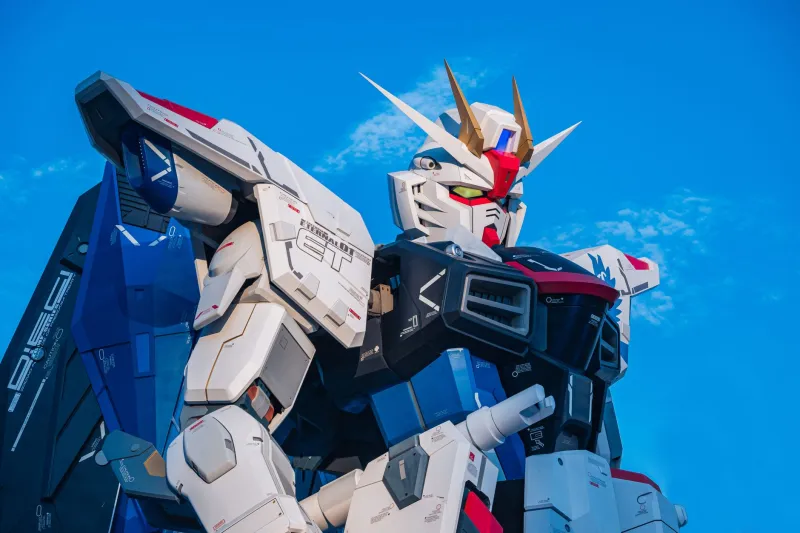
There's something primal about the fantasy of climbing into a giant robot and taking control. Maybe it's the Evangelion poster on your wall, maybe it's a childhood memory of watching Voltron before school, or maybe you just really enjoyed stomping through a city in MechWarrior 2 at 2 a.m. Whatever got you here, you've probably noticed that how we interact with mecha games has changed almost as dramatically as the robots themselves. The interface — the thing between your hands and the machine — has been quietly evolving for decades, and it's shaped the entire culture around piloting mechs in ways most people don't stop to appreciate.
Let's take a walk through it.
Quarter-Munching Origins: The Arcade Era
If you want to find the roots of mecha game interfaces, you're heading back to the dimly lit arcades of the late '70s and '80s. Games like Battlezone and early mech-adjacent shooters gave players a pair of handles — sometimes literally tank-style dual sticks — and said, "figure it out." There was no tutorial. No onboarding. You fed quarters into the machine and you learned by dying.
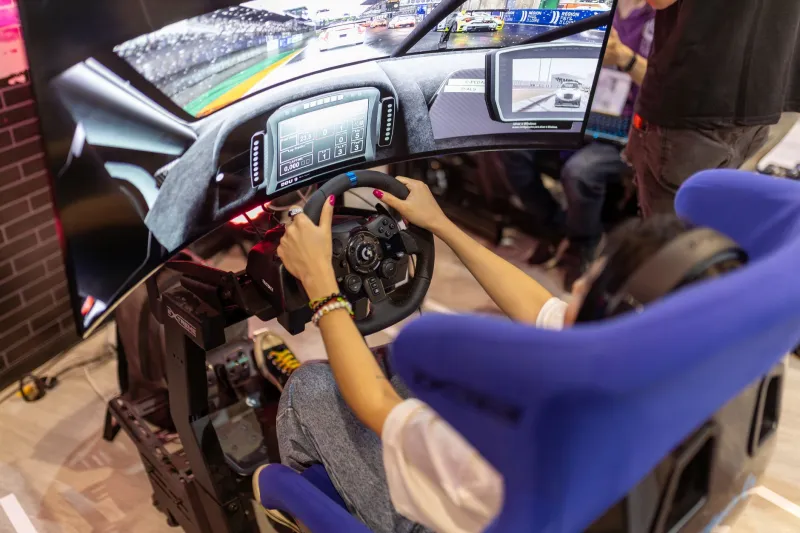
What made those controls interesting wasn't sophistication — it was physicality. The resistance in a real arcade stick, the satisfying clunk of a button, the way your whole upper body got involved when you leaned into a turn — that stuff mattered. It created an illusion of weight, of consequence. You weren't just pressing buttons; you were operating something.
Japanese arcade culture turbocharged this with full-scale cockpit cabinets. Games like Mobile Suit Gundam and later Virtual On dropped players into enclosed pods with actual throttle and pedal setups. Some American arcades got these units, and if you were lucky enough to encounter one, you never forgot it. The barrier between player and pilot felt paper-thin.
The Home Console Compromise
When mecha gaming moved into living rooms, developers hit a wall. You can't ship a hydraulic cockpit with every SNES cartridge. So the industry made compromises — and honestly, some of those compromises turned out to be genuinely brilliant.
The dual-analog controller became the de facto mech interface for a generation. Armored Core on the original PlayStation is the case study here. Left stick for movement, right stick for camera, shoulder buttons for weapons — it wasn't a cockpit, but it built a language that players could learn and master. The depth came from the control scheme itself. Piloting a lightweight, fast-boosting frame felt different from hauling around a tank-legged heavy unit, and the controller communicated that through timing and momentum rather than physical feedback.
MechWarrior 2 on PC went a different direction entirely, embracing complexity as a feature. You could play with a keyboard and mouse, sure, but the game practically begged you to plug in a HOTAS (Hands On Throttle-And-Stick) setup. Suddenly you were managing heat sinks, targeting systems, and torso twist with actual dedicated hardware. It was closer to a simulation than an action game, and a passionate community formed around exactly that distinction.
This split — action controls versus simulation controls — became one of the defining tensions in mecha gaming and it hasn't fully resolved even today.
The Motion Control Detour
Let's be honest about the Wii era. Motion controls seemed like they were made for mecha games. Wave your arms to swing a robot's fist! Tilt to dodge! The pitch practically wrote itself.
In practice, it was mostly a mess. The precision wasn't there. Waggle mechanics felt disconnected from the on-screen weight of a 50-ton machine. A few games made interesting attempts — and the concept wasn't entirely without merit — but motion control never cracked the mecha problem the way people hoped. What it did do was remind developers (and players) that feeling like a pilot requires more than just physical movement. It requires feedback. When your actions don't connect to convincing responses on screen, the illusion collapses fast.
The lesson stuck.
Modern Controllers and the Refinement Era
Somewhere in the PS3/Xbox 360 generation, mecha game controls quietly got very, very good. Titles like Armored Core 4, Xenoblade Chronicles X, and later Override: Mech City Brawl found ways to pack enormous mechanical complexity into standard controller layouts without overwhelming players. Trigger sensitivity, vibration feedback that communicated impacts and engine strain, and smarter camera systems all contributed to a kind of invisible immersion.
The rumble in your controller when a railgun fires isn't nothing. That tiny physical response is doing real work — it's closing the gap between input and experience. Developers started treating haptic feedback as a design element rather than an afterthought, and the community noticed. Forum threads and Reddit posts from this era are full of players talking about feel in ways that would've sounded strange a decade earlier.
The PS5's DualSense pushed this further with adaptive triggers that can actually simulate resistance — imagine the trigger fighting back as your mech's arm cannon overheats. For mecha games, that's not a gimmick. That's immersion infrastructure.
VR: The Closest We've Gotten to Actually Being There
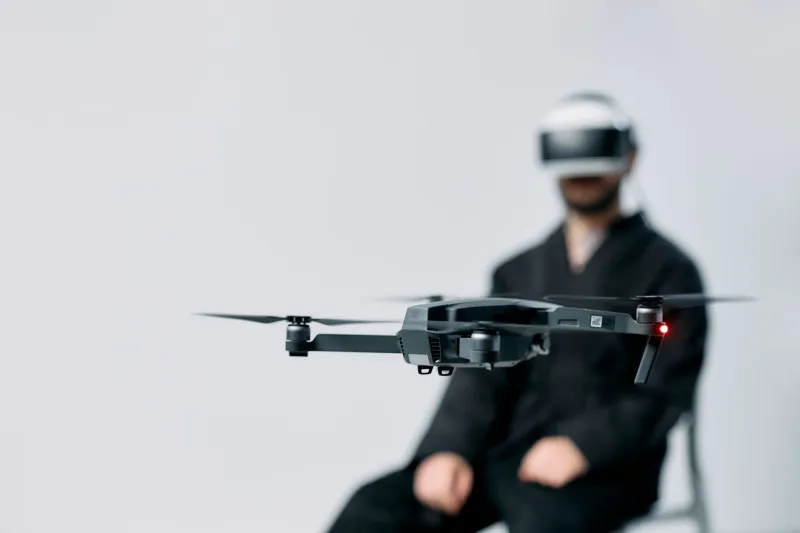
And then there's VR. When Archangel: Hellfire hit headsets and let players stand inside a mech's cockpit, something clicked that no flat screen had ever quite achieved. The scale landed differently. Looking up at an enemy machine, tracking it with your physical head rather than a thumbstick — it rewired something in the lizard brain.
VR mecha experiences are still finding their footing. The locomotion problem (how do you move a giant robot without making the player nauseous?) hasn't been fully solved. Full-room cockpit setups exist but they're expensive and niche. But the promise is undeniable. When the technology catches up to the vision, sitting in the pilot's seat through a VR headset might finally deliver what those Japanese arcade pods hinted at back in 1990.
Longtime fans in the community have strong opinions about which era got it right. Simulation heads will tell you nothing beats a proper HOTAS setup with a full dashboard layout. Action game veterans swear by the tight, responsive dual-stick feel of classic Armored Core. And there's a growing contingent who think haptic feedback and VR together represent the actual future of the genre.
The Interface Is Part of the Story
Here's the thing that ties all of this together: the way we control mecha games has never been just a technical question. It's a storytelling question. Every generation of hardware forced developers to ask what "piloting a giant robot" should feel like — and the answers they gave shaped entire subcultures, fan communities, and design philosophies.
At Robo Murito, we think about this stuff a lot, because the robots are only half the equation. The other half is you, your hands, and whatever's sitting between them and the machine. That relationship has been evolving for fifty years, and honestly? We're just getting to the good part.