Throttle, Stick, and Soul: Why Mecha Gamers Are Done Settling for Lazy Control Schemes
There's a particular kind of frustration that lives in the mecha gaming community. It's not the frustration of a tough boss fight or a brutal ranking system — it's something deeper, almost philosophical. It's the feeling you get when you're piloting a 40-ton war machine with the same twin-stick layout used to play a battle royale. Something just doesn't add up.
For decades, mecha games have carried this tension between accessibility and authenticity. And right now, in 2024, that tension is reaching a boiling point.
The Arcade Era: Simple Inputs, Big Dreams
Cast your mind back to the late '80s and early '90s. Arcade halls across the US were packed with kids dumping quarters into machines like Cyber Sled and Sega's Steel Gunner. The controls were dead simple — a joystick, maybe a couple of buttons, and the raw thrill of blowing stuff up from inside a chunky plastic cockpit shell. Nobody was asking for nuance. The fantasy was enough.
But even then, there were hints of something more ambitious. Sega's Battletech arcade pods — those full-sized cockpit cabinets that showed up in select arcades and malls — gave players a taste of genuine immersion. Multiple monitors, a throttle, a joystick that felt like it belonged in an actual machine. People lost their minds over it. The line between game and experience started to blur, and players noticed.
The problem was that when mecha games made the jump to home consoles, that ambition got compressed. You couldn't exactly ship a full cockpit with a Super Nintendo cartridge.
The Console Compromise
Through the '90s and 2000s, mecha titles on home platforms had to make peace with the hardware they were given. The MechWarrior series on PC managed to preserve some complexity — keyboard shortcuts, mouse aiming, and optional joystick support gave the franchise a reputation for depth. But on consoles, things got flattened out. Armored Core worked around PlayStation's DualShock by splitting movement and aiming across both analog sticks, which was clever but also kind of awkward once you started stacking on boost management and weapon switching.
Developers were solving a real problem: how do you make a machine with dozens of theoretical control inputs feel playable on a controller with maybe 16 buttons? The solutions were often smart, but they came at a cost. The feeling of operating something massive got diluted into the feeling of just… playing a game.
For a lot of players, that was fine. Mecha games were still a blast. But a vocal segment of the community never quite got over what was lost in translation.
Armored Core VI Reignites the Conversation
When FromSoftware dropped Armored Core VI: Fires of Rubicon in 2023, it landed like a missile strike on a genre that had gone quiet for almost a decade. The game's control scheme was notably dense — boost management, weapon sets across both shoulders and arms, a dedicated melee button, assault boost, and quick-boost all competing for real estate on a standard controller. It was a lot to absorb.
And the community? They loved it. Not because it was easy, but because it felt like something. The learning curve was steep enough that mastering the controls became part of the identity of playing the game. Reddit threads, YouTube tutorials, and Discord servers lit up with players sharing their custom control configs and debating optimal layouts. That engagement was telling.
What AC6 proved is that players aren't scared of complexity — they're scared of complexity that feels arbitrary. When every button press has weight and consequence, the density becomes part of the experience rather than a barrier to it.
The HOTAS Underground
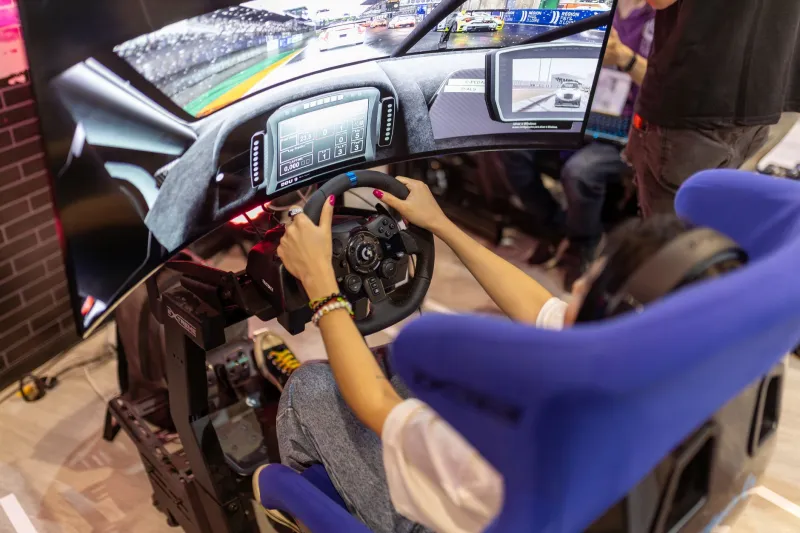
Over on the PC side of things, a dedicated subset of mecha fans has been running their own experiment for years. HOTAS setups — Hands On Throttle And Stick, for the uninitiated — are flight sim peripherals that some MechWarrior Online and MechWarrior 5 players have adapted for giant robot combat. The results are, by most accounts, deeply satisfying and absolutely impractical.
Setting up a HOTAS for mech combat takes time, patience, and a willingness to rebind approximately one million inputs. But players who've gone down that rabbit hole describe the experience as transformative. Suddenly, managing heat levels while coordinating weapon groups while keeping your torso twisted toward a target feels less like a UI challenge and more like actual piloting.
The catch is that most mecha games aren't built with this in mind. Support is inconsistent, documentation is sparse, and developers rarely prioritize the peripheral-enthusiast crowd. But the fact that players are going to these lengths speaks volumes about the appetite for genuine cockpit immersion.
What Developers Are (Slowly) Getting Right
There are encouraging signs that studios are paying attention. MechWarrior 5: Clans, released in late 2024, put real effort into control customization and cockpit feedback — instruments that actually react, heat gauges that feel punishing, and a layout that rewards players who invest time in learning the systems. It's not perfect, but it's pointed in the right direction.
Independent developers are also pushing the envelope. Titles built around VR cockpit experiences are starting to carve out a niche, letting players physically look around their mech's interior and interact with controls in three-dimensional space. It's still a small corner of the market, but it's growing.
The broader conversation in the mecha gaming community right now centers on feedback — specifically, haptic feedback and adaptive triggers. PlayStation 5's DualSense controller opened a door by making it possible to feel resistance, texture, and impact through the controller itself. Mecha games that tap into this well can make firing a railgun feel genuinely different from triggering a missile volley. That kind of sensory detail is exactly what the genre has been missing.
The Players Are Leading This Time
What's interesting about the current moment is that the push for better cockpit experiences isn't coming from developers pitching features — it's coming from the community demanding them. Forums, content creators, and competitive players are increasingly vocal about what they want: deeper customization, more meaningful feedback, control schemes that respect the complexity of the machines they're supposed to represent.
Mecha games have always been about the fantasy of inhabiting something powerful and mechanical. The controls are the handshake between player and machine. When that handshake is weak, the whole fantasy wobbles.
The genre's most passionate fans have spent years making do with compromises. But with the tools now available — advanced haptics, better peripheral support, VR, and developers who've seen how well complexity can land when it's done right — the ask feels less like wishful thinking and more like a reasonable demand.
The cockpit experience mecha fans have always wanted is technically achievable. The question is whether developers are ready to fully commit to building it.